Published February 21, 2025
So, you’ve finally decided to turn your backyard into an aquatic oasis with an above-ground pool. Fantastic! But hold up—before you start envisioning pool parties and lazy summer afternoons, there’s a critical piece of the puzzle you can’t ignore: electricity. Done wrong, it’s a safety nightmare. Done right, it’s seamless and stress-free.
You might be asking yourself, what are the electrical requirements for an above ground pool? Let’s dive deep (pun intended) into the specifics and make sure you’re not just setting up a pool, but setting it up right.
The Fundamentals: Why Pool Electricity Can’t Be Overlooked
Electricity and water are a volatile mix. The National Electrical Code (NEC) Article 680 lays out the rules, but understanding them in plain English is where most pool owners get lost. Here’s what you need:
- A dedicated circuit to power your pool pump and filter
- Proper bonding and grounding to prevent shocking (literally)
- GFCI outlets to cut off power in case of electrical faults
- Correct wiring and conduit to protect your investment from the elements
This isn’t a DIY experiment—messing up your above ground pool electrical requirements could mean power failures, blown circuits, or worse, electrical hazards.
Step-By-Step: Wiring Your Pool the Right Way
1. Lock in the Right Power Source
What electrical is needed for an above ground pool? Simple: most pool pumps require 120V, but heavy-duty setups may need 220V. Not sure?
2. Install a Dedicated Circuit
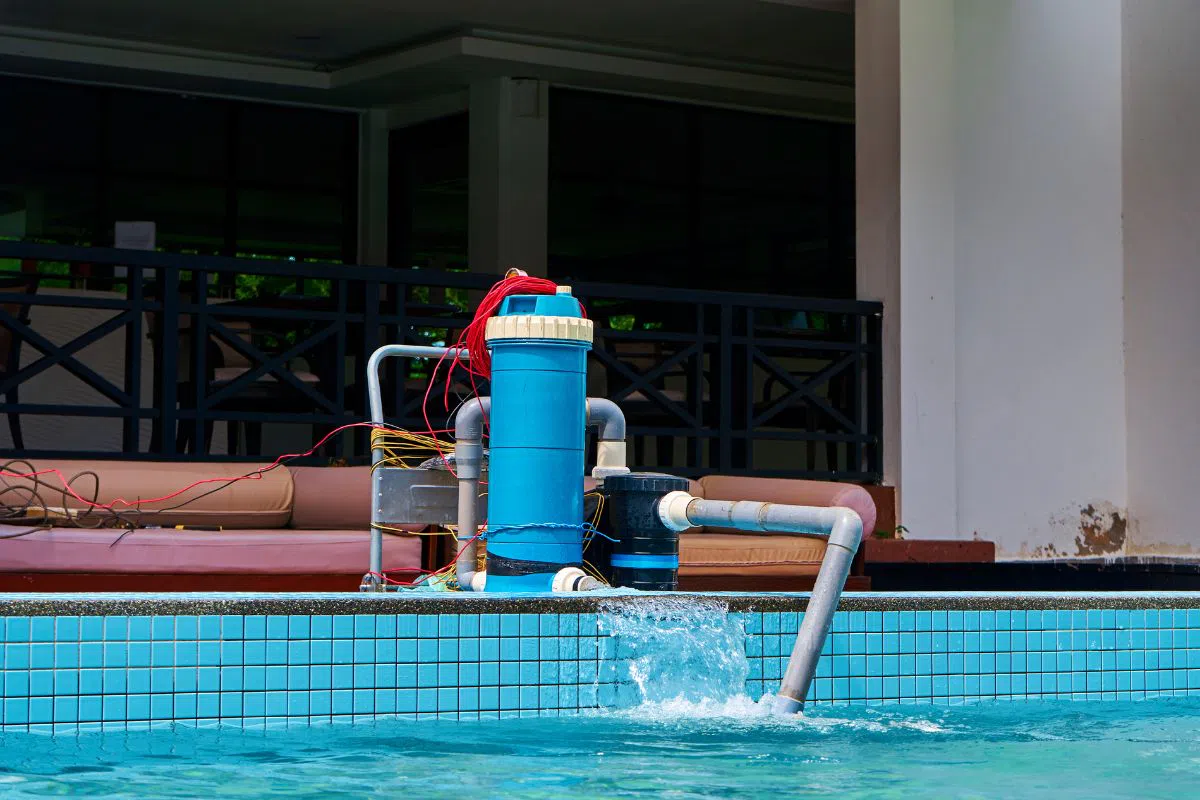
Your pool pump needs its own electrical circuit—no sharing power with household appliances. This prevents overloads and frequent breaker trips. And here’s the kicker: GFCI protection is non-negotiable. These outlets instantly shut off power when they detect an imbalance, potentially saving lives.
Pro Tip: NEVER, and we mean never, use an extension cord. It’s a recipe for disaster and violates the electrical code.
3. Grounding & Bonding: The Unseen Lifesavers
What are the requirements for a ground wire in a pool? Every metallic part of your pool, from the pump to the ladder, must be bonded to prevent electrical shocks.
- Grounding directs stray electricity safely into the earth.
- Bonding ensures all metal components carry the same electrical charge, eliminating any risk of stray voltage in the water.
What type of wire is used to ground a pool? Typically, a solid #8 AWG copper wire, looping around the pool’s perimeter and connects to a ground rod. Get it wrong, and you might experience a tingling sensation in the water—a sign of stray voltage that needs urgent fixing.
4. Smart Outlet Placement
Here’s the rule: 6 feet away if GFCI-protected, 20 feet if not. Keep those outlets far from splashes and accidental contact. If your home’s electrical panel is far from the pool, underground conduit wiring is the solution.
5. Know Your Pool Pump’s Voltage & Amperage
Are above-ground pool pumps 110 or 220? Most run on 110V, but some high-powered models need 220V for greater efficiency.
How many amps for an above-ground pool? Typically, 15-20 amps. Make sure your circuit breaker can handle the load, or risk constant tripping and frustration.
A Story from the Field: What Happens When You Skip Proper Wiring
Picture this: You’ve just set up a pristine above-ground pool, ready for summer fun. You plug in the pump and—boom—your breaker trips instantly. Frustrated, you grab an extension cord. Still nothing. After hours of troubleshooting, you realize your electrical system isn’t up to the task.
This is far too common. A dedicated circuit, proper grounding, and GFCI protection would have prevented all of this.
Avoid These Costly Electrical Mistakes
- Relying on extension cords – A dangerous shortcut that violates code.
- Skipping GFCI outlets – Puts swimmers at serious risk.
- Ignoring bonding – Can lead to shocking results (literally).
- Using an outdated panel – Leads to constant tripping and power failures.
FAQs
What electrical is needed for an above-ground pool?
A dedicated 120V or 220V circuit with GFCI protection, proper bonding, and grounding.
Are above-ground pool pumps 110 or 220?
Most use 110V, but larger pumps may require 220V.
How many amps for an above-ground pool?
Most setups need 15-20 amps, depending on pump size.
What are the requirements for a ground wire in a pool?
A copper bonding wire that connects all metal parts, preventing stray voltage hazards.
What type of wire is used to ground a pool?
A #8 AWG solid copper wire, typically looped around the pool.
Final Thoughts
Your above-ground pool is only as safe as its electrical system. Cutting corners is not an option when it comes to electricity and water.
Don’t risk faulty wiring or dangerous setups—hire a certified expert.
Ready to get your pool wired the right way?
About The Author
Hello! I am , a graduate of Riverside College. My career has evolved into focusing on writing, where I deliver high-quality and meticulously researched content. I have a proven track record of developing helpful articles that engage a wide variety of readers.